
Located at the edge of the Mediterranean, on the slopes of Mount Učka gently descending towards the coast of Kvarner Bay, Opatija Riviera with its mild climate, beautiful architecture, quality hotels and luxurious, well-tended parks and promenades, offers plenty of possibilities for a pleasant stay throughout the year.
The very attractive geographic position, enabling its warm seas to be quickly reached from many cities in Central Europe, lush green scenery and a pleasant climate were some of the main reasons for the tourism development at the end of the 19th century.
The Riviera is named after Opatija, a town that was the cradle of modern European tourism and which has for more than 170 years been considered one of the most elite Mediterranean destinations. Everything started with the Villa Angiolina in1844. which was built by the Rijeka patrician Iginio Scarpa in honour of his wife. The villa soon became a favourite meeting place for the nobility.
Opatija Riviera
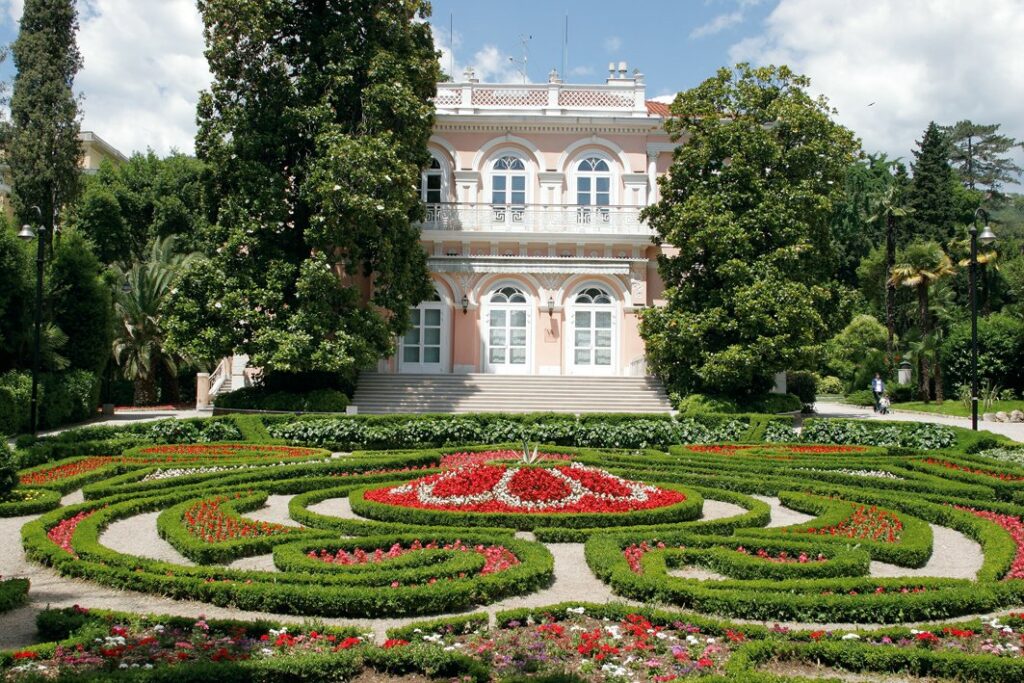
Opatija, often called the pearl of the Adriatic in record time has risen from a small fisherman village with a Benedictine abbey and the church of St. Jacob (dating from 1449), to a tourist resort. Actually if you translate Opatija to English language it means abbey.
The modern history of Opatija began in 19 st. when aristocracy and wealthy people of that time discovered the beauty of this region. It quickly become the fashionable tourist destination and soon luxury hotels and villas were built. The notable person who first discovered the magic of Opatija was Iginio Scarpa, a merchant from Rijeka who built his holiday home in 1844 and named it the Villa Angiolina after his wife. That event markedthe beginning of tourism in Opatija. After that, Opatija started to develop intensely under the supervision of the Austro-Hungarian Empire.
Kings and emperors, writers, philosophers, poets and composers used to stay here – the emperors Franz Joseph and William II, the queen of Romania Elisabeth who used to publish poems under the pseudonym of Carmen Sylva, then the empress Sissi, the writers A. P. Chekhov and James Joyce, the ballet dancer Isadora Duncan, and the composers Gustav Mahlerand Giacomo Puccini.
Stroll along the main road and be charmed by the architecture of Opatijas villas, sip a coffee in one of the famous Opatijas caffe bars and imagine how it was in the late 19th century when high society people walked around.
Lovran
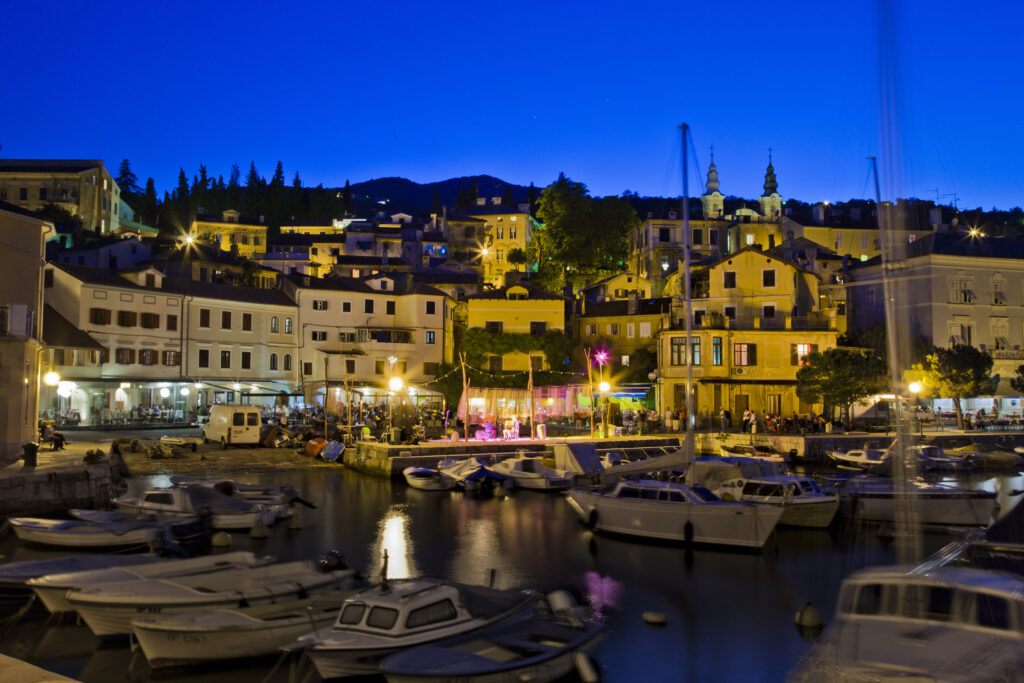
Lovran took its name from laurel, laurus nobilis, which grows abundantly. It is one of the oldest coastal settlements on the eastern shore of Istrian peninsula. By the early Middle Ages it was an important urban and shipbuilding centre of northern Adriatic. Following the sudden development of port towns in the vicinity (Trieste, Pula, and Rijeka) which became the new and dominant urban centres in the region, Lovran lost its significance.
Lovran has preserved its historical core and medieval city plan. Stroll into the old city – is not big and even if you get lost soon you will find your way out. As a tourism in Opatija started to develop, the same happened to Lovran. In that period many of Lovran villas were built. They were designed by the celebrated Viennese architect Carl Seidel and today they are part of the world architectural heritage.
Volosko
A former fishing village seems to encapsulate the true Mediterranean essence with its narrow lanes and shaded stairways, small squares and traditional houses built close to each other, colourful flowers on wooden windows, and the scent of the sea and the breeze of tramontana wind in the air.
BEACHES
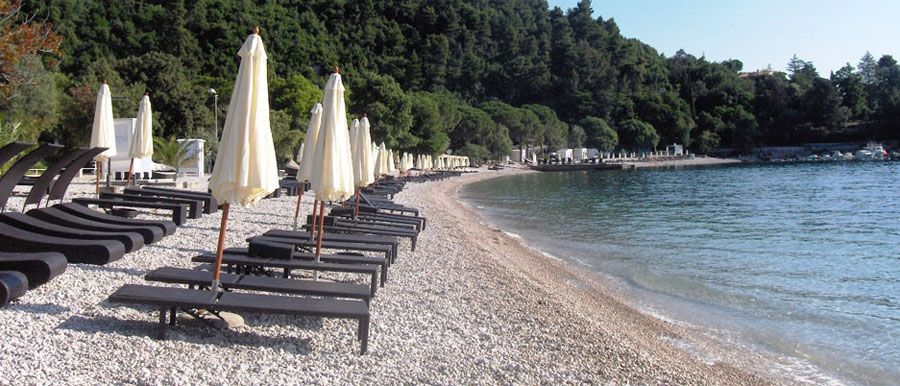
Beach Medveja
Beach Mošćenička Draga
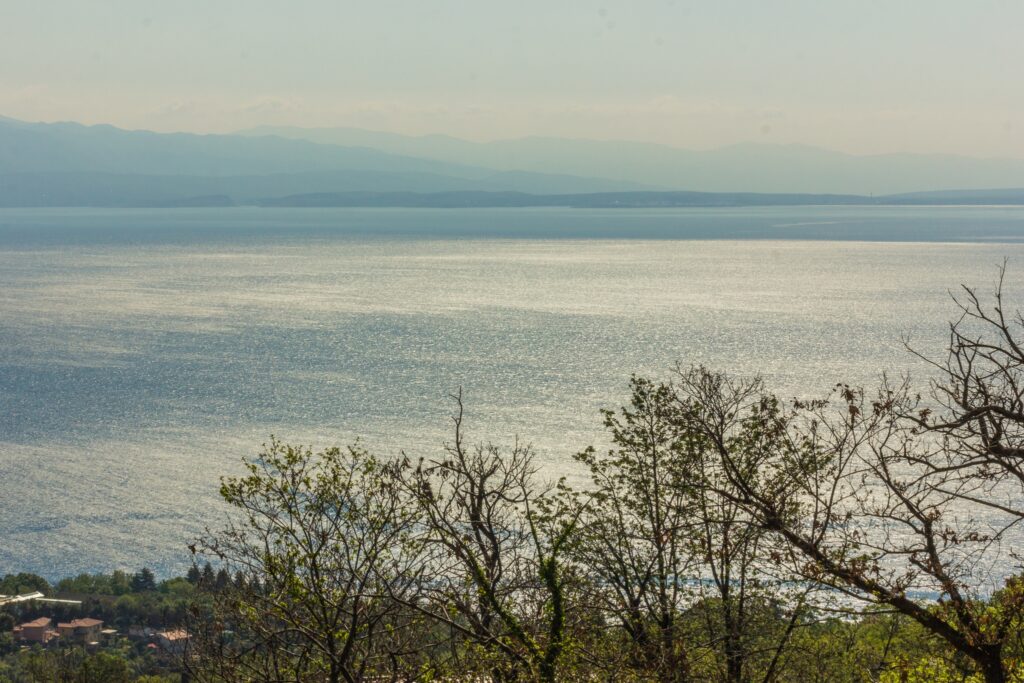
Beach Resort Lido